
TL;DR: To check if your WiFi is 2.4 or 5 GHz, start with the network name. A name ending in “5G” or “5GHz” usually identifies the 5 GHz band, while the other network is typically 2.4 GHz. If both bands share one name, check the connection details on your device or in your router’s app. In general, 2.4 GHz gives you longer range, while 5 GHz offers higher speeds at shorter distances.
In this guide
- How to check your WiFi band
- 2.4 vs 5 GHz: what’s actually different?
- Which WiFi band should you use?
- Fixing common WiFi band problems
- Getting better performance from either WiFi band
- Wrapping up
- FAQs
Most home WiFi routers use both 2.4 GHz and 5 GHz, often without you even noticing which one your devices are connected to. This dual-band WiFi technology lets compatible devices use either frequency depending on factors like range and signal strength. Newer WiFi 6E and WiFi 7 routers can also use a 6 GHz band, but if you’re trying to figure out whether a device is on 2.4 or 5 GHz, the steps below will help.
You may only start thinking about WiFi bands when something acts up: a smart plug refuses to connect, your laptop feels sluggish in the bedroom, or your router app suddenly starts throwing around terms like “band” and “SSID.” Luckily, figuring out which frequency your WiFi connection is using doesn’t require any special equipment.
How to check your WiFi band

Start with the network name
Open your WiFi settings on whatever device is nearby and scan the list of available connections. A dual-band router may use separate names like HomeNetwork and HomeNetwork_5G. In that kind of setup, the name labeled “5G,” “5GHz,” or something similar is usually the 5 GHz band, while the other is typically 2.4 GHz. Just keep in mind that WiFi names can be customized, so this is a quick clue rather than a guarantee.
If your home only shows one network name, that doesn’t mean you’re stuck on a single frequency. Most routers built in the last several years use band steering, a setting that combines 2.4 GHz and 5 GHz under one SSID and quietly assigns each device to whichever band suits it best. It’s convenient, but it also means you can’t tell your band from the name alone, which is where the device-specific checks below come in handy.
On Windows
Click the WiFi icon in the taskbar, then the arrow next to your connection to see the network list. Right-click the network you’re on and open Properties. Scroll to the section labeled Network band or Network frequency, and it will say 2.4 GHz or 5 GHz outright.
On a Mac
Hold the Option key and click the WiFi icon in the menu bar at the same time. A longer menu appears with a Channel line. Channels 1, 6, and 11 belong to 2.4 GHz, while channels like 36, 40, 44, 149, and 153 sit on 5 GHz.
On Android
Open your WiFi settings and tap the gear or info icon next to the network you’re connected to. Depending on your phone and Android version, you may see the frequency listed as 2.4 GHz or 5 GHz, or you may see a channel number instead. If neither appears, check your router’s app or admin page to see which band the phone is using.
On iPhone
Here’s the honest answer: iPhone doesn’t show you the band directly inside its regular WiFi settings, no matter how deep you dig. The network name method above is genuinely your best option. If your router uses band steering and both bands share one name, you’ll need to check the router’s own app or admin page to see which band your phone landed on.
Check the router label as a backup
If you’ve never changed your WiFi names, take a look at the sticker on the bottom or back of the router. Some wireless routers list separate default names for the 2.4 GHz and 5 GHz bands. If you’ve renamed your networks since setting up the router, though, the sticker won’t tell you which name you’re currently using.
2.4 vs 5 GHz: what’s actually different?
Once you know which WiFi band you’re using, the next question is usually why it matters. The main differences between 2.4 GHz and 5 GHz come down to range, speed, and interference.
| 2.4 GHz | 5 GHz | |
| Range | Longer range and better at traveling through walls and floors | Shorter range and more likely to weaken through obstacles |
| Speed | Slower speeds, but usually enough for web surfing, email, and many smart home devices | Higher speeds that are better suited for streaming, video calls, and other bandwidth-heavy activities |
| Interference | More crowded because Bluetooth devices, microwaves, nearby WiFi networks, and other wireless devices can use similar frequencies | Usually less interference and less network clutter |
| Best for | Devices farther from the router, IoT devices, smart plugs, bulbs, and some security cameras | Laptops, smartphones, gaming, video calls, and 4K streaming closer to the router |
The 2.4 GHz band uses lower wireless frequencies, which generally gives it a longer range and helps the WiFi signal travel through walls and other solid objects more easily. The main disadvantage is network congestion: many wireless devices, Bluetooth products, and other electronics share similar frequencies, which can lead to more interference in a busy home.
The 5 GHz band uses higher frequencies and a shorter wavelength, so it typically works best over shorter distances. One major advantage is that it can provide faster speeds and higher data transfer speeds with less interference. That makes 5 GHz a good fit for high-bandwidth activities like 4K streaming, video calls, large downloads, and online gaming when you’re reasonably close to the router.
Keep in mind that the maximum speed listed for a router isn’t necessarily the internet speed you’ll see on a phone or laptop. Your actual data transfer rate and connection quality can vary based on distance, interference, your internet plan, router capabilities, and device compatibility.
That doesn’t mean 5 GHz is always the best choice, though. A security camera near the far end of the yard, for example, may hold a steadier 2.4 GHz WiFi connection even though it offers slower speeds. A faster connection isn’t much help if the signal keeps dropping.
If you’re still getting slow downloads or choppy video calls on a strong 5 GHz connection, the WiFi band may not be the problem. It may be worth checking how much internet speed you actually need for the devices and activities in your home.
Which WiFi band should you use?

Most newer laptops, smartphones, and tablets support multiple bands, so they can take advantage of both 2.4 GHz and 5 GHz. If your wireless router uses one WiFi name for both, the router and device can often steer the connection toward the band that makes the most sense at the time. Close to the router, that may mean 5 GHz for faster performance; farther away or through several walls, 2.4 GHz may provide a stronger connection.
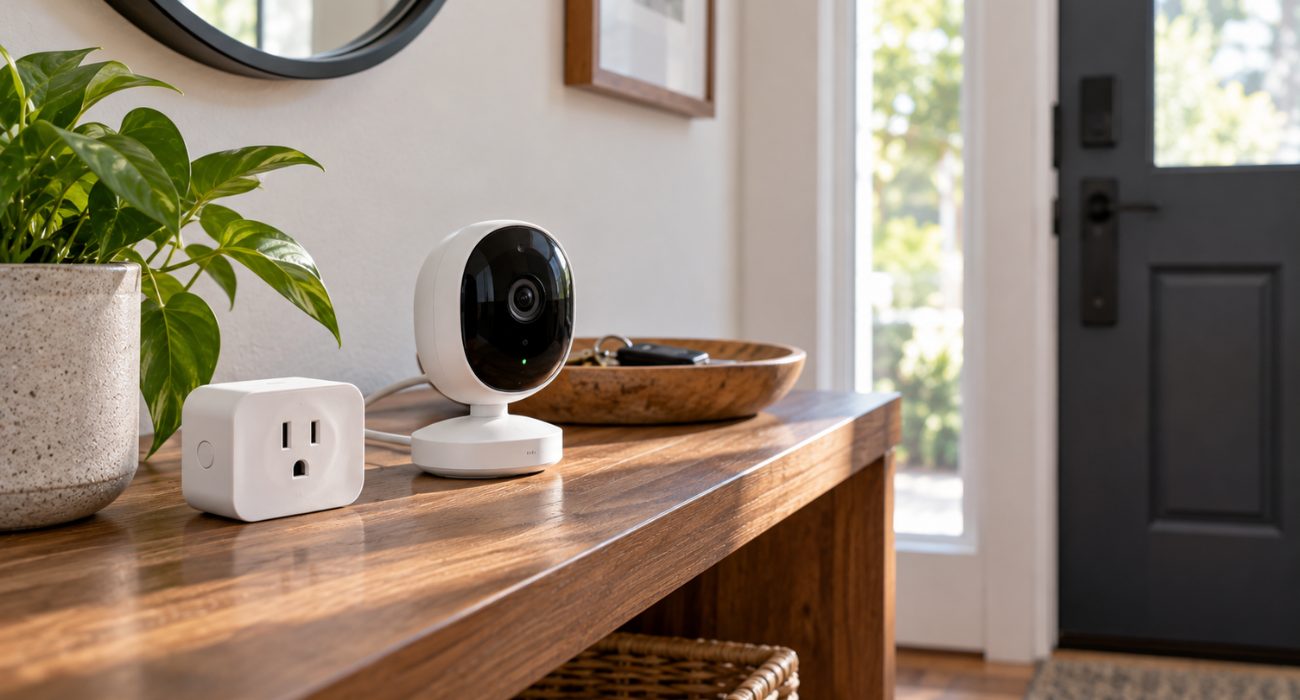
Older or simpler wireless devices can be pickier. Smart home products and legacy devices, including some bulbs, plugs, thermostats, cameras, and older baby monitors, often rely on the 2.4 GHz band. Devices like these benefit from its longer range more than they would from the potential speed benefits of 5 GHz. So if a new device refuses to connect during setup, checking its supported WiFi bands is a good first step.
This can come up with smart speakers too. If you’re setting up or moving an Echo device and it won’t connect, our guide to connecting Alexa to a new WiFi network walks through the network and band checks worth trying.
Fixing common WiFi band problems
A few band-related problems show up more often than others. Before changing a bunch of router settings, match what you’re seeing to the situation below:
- Your smart device can’t find the right WiFi: If both bands share one name, check your router’s app for an option such as Separate Bands or Split Bands. Temporarily giving the 2.4 GHz and 5 GHz connections different names can make it easier to connect devices that only support 2.4 GHz.
- 5 GHz works near the router but gets weak in another room: That’s usually a range issue rather than a broken internet connection. Higher frequencies don’t travel through walls as well, so try moving closer or letting the device use the 2.4 GHz connection at longer distances.
- Setup keeps failing on a smart device: Make sure your phone is connected to the same WiFi you’re trying to use for the device. If the setup app keeps jumping to cellular data, temporarily disabling mobile data may also help.
If you’re seeing connectivity issues across multiple devices, the WiFi band may not be the real problem. For example, if WiFi works on your phone but not your laptop, the laptop’s wireless settings or WiFi adapter may be the better place to troubleshoot.
Getting better performance from either WiFi band
You don’t need to micromanage every device connected to your home network, but a few simple changes can improve both range and reliability:
- Keep your wireless router in a central, open location rather than inside a cabinet or tucked into a far corner.
- On the 2.4 GHz band, stick with channels 1, 6, or 11 when choosing manually. Microsoft recommends these channels to help reduce overlap and interference from nearby WiFi connections.
- Let your router handle channel selection if everything is working well. There’s usually no reason to change channels manually just for the sake of changing them.
- Consider a WiFi extender or mesh system for larger coverage gaps. These can help in parts of the home where the wireless range consistently drops off.
Wrapping up
Figuring out if your WiFi is 2.4 or 5 GHz comes down to two moves: check the network name first, then confirm with your device’s own WiFi details if the name alone doesn’t tell you. From there, the band you actually want depends on what you’re doing and where you’re standing, not on which one sounds more advanced.
If your setup keeps giving you band-related headaches even after sorting out the naming, or if you’re working with an older router that’s making all of this harder than it needs to be, a wireless network installation from Geeks on Site can get both bands set up correctly from the start.
FAQs
Can I use 2.4 GHz and 5 GHz at the same time?
Yes. Most home routers broadcast both bands simultaneously, and different devices in your house can sit on different bands at once without any conflict. Your laptop might be on 5 GHz while a smart plug in another room runs on 2.4 GHz, all through the same router.
How do I manually switch a device from one band to the other?
If your router uses separate network names for 2.4 GHz and 5 GHz, choose the other network from your device’s WiFi list and reconnect. If both bands share one name, your router may choose the band automatically. Some routers let you temporarily separate the bands or adjust band preferences through their app or admin page.
Why does my 5 GHz connection disappear in certain rooms?
This comes down to range, not a malfunction. Since 5 GHz signals weaken faster through walls and distance, a spot two rooms from the router might sit right at the edge of coverage. If one area of your home consistently has a weak signal, moving the router may help. For larger coverage gaps, a WiFi extender or mesh system may be worth considering.
Does my WiFi automatically decide which band to use?
If your router has band steering turned on, yes. It monitors signal strength and congestion for each connected device and shifts them between bands as conditions change, all without asking. You can usually turn this feature off in the router’s advanced settings if you’d rather control band assignment yourself.
Last Updated on September 9, 2026